Materials
PLA, PETG or ASA: which filament to use outdoors
A planter for the balcony, a clothes-line peg, a phone mount for the car… Indoors almost any filament will do, but outside a part faces three things: sun (UV rays), heat and water. Here's what each material withstands, with the manufacturers' data, and which one to pick depending on where the part goes.
What being outdoors does to a part
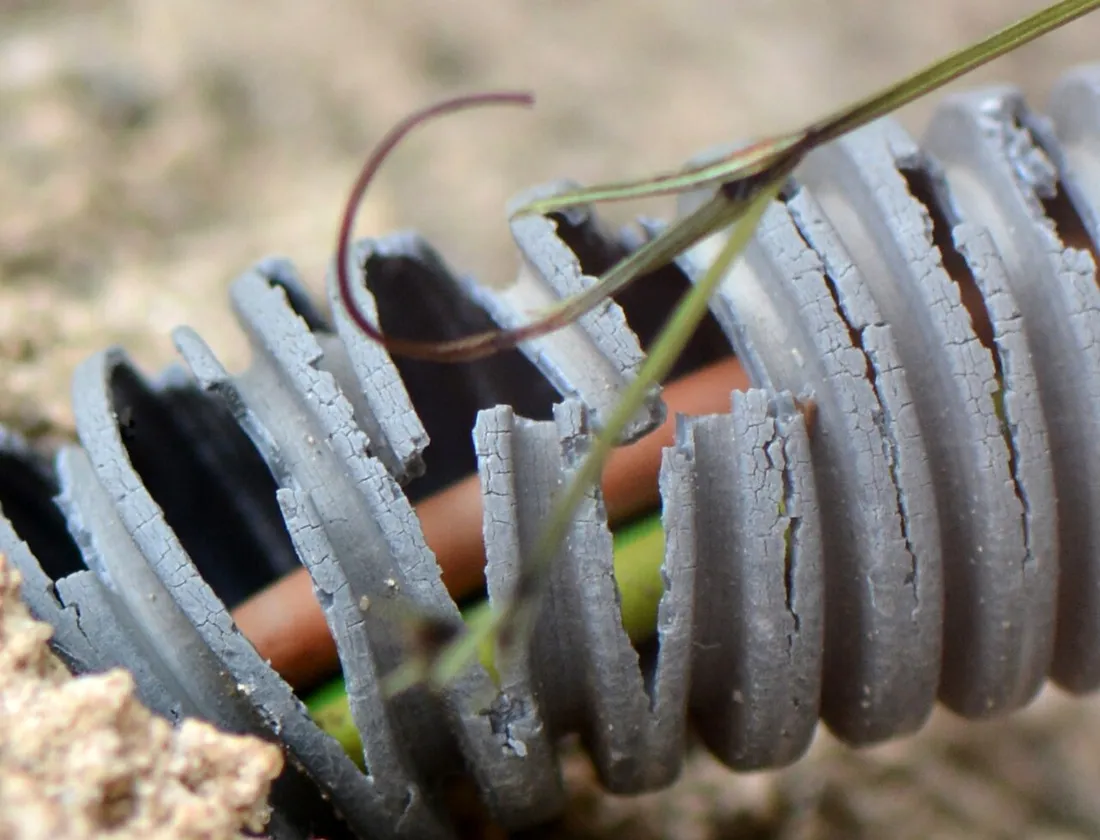
- UV rays. Sunlight degrades some plastics: they fade, turn brittle and crack. Prusa warns that PLA degrades under UV light and that ABS used outdoors turns yellowish and more brittle over time.
- Heat. It doesn't need to reach melting point: it's enough for the plastic to soften for a loaded part to bend or deform.
- Water and humidity. Rain, watering, dew. Prusa highlights PETG precisely for being water and humidity resistant.
How hot is "hot"
An Arizona State University study, published in the journal Temperature, measured cars parked on days above 35 °C: after one hour in the sun, the dashboard averaged 69 °C; in the shade, 48 °C. It's an extreme case, but a useful reference for any part that goes inside a car or sits in the sun in midsummer.
| Material or reference | Temperature | Source |
|---|---|---|
| PLA | softens above 60 °C | Prusa |
| PETG | outdoors below 80 °C | Prusa |
| ASA | up to 93 °C | Prusa |
| Dashboard in shade | 48 °C | ASU (2018) |
| Dashboard in sun | 69 °C | ASU (2018) |
PLA: for indoors
It's the easiest filament to print, but Prusa is clear: it's not suitable for technical or outdoor use. It softens and deforms above 60 °C, degrades under UV light and, on impact, tends to break along the layers. A figure on a shelf is fine; a mount on the dashboard or a part in the August sun is not.
And a common myth: PLA being "biodegradable" doesn't mean it vanishes in the garden. According to Prusa, it only breaks down in industrial composting facilities above 80 °C; in soil it won't disintegrate and ends up releasing microplastics.
PETG: the outdoor all-rounder
For most outdoor parts, PETG is the sensible choice. Prusa considers it suitable for indoor and most outdoor use below 80 °C, water and humidity resistant, and uses it to make parts for its own printers. Bambu Lab advertises its PETG as resistant to water, UV and temperature, giving examples such as planters, watering cans, garden labels and bathroom accessories.
Its big advantage over ASA is that it doesn't need an enclosed printer: Prusa describes it as easy to print, suitable for beginners and with very little tendency to warp. Its downsides are stringing and supports that are hard to remove; we cover them in how to print PETG.
ASA: for real sun
ASA is the material designed specifically for weathering. Prusa presents it as the successor to ABS: more UV resistant, with less warping and less smell, and temperature resistance up to 93 °C. Bambu Lab says the same: its ASA keeps its shape at 100 °C and resists UV, oxidation and ageing, protecting against breakage and colour loss in long-term outdoor use; as examples it lists automotive exterior parts, signage and outdoor equipment.
The price is that it's harder to print:
- It warps as it cools, especially on large parts or with lots of infill. Prusa recommends a bed at 100 °C or more and the printer inside an enclosure.
- It releases gases such as styrene, according to Bambu Lab, which recommends an enclosed printer and good room ventilation.
- It absorbs some moisture, so it's worth storing dry; we explain how in how to dry filament.
Can your printer do it? According to our material checker, of the 72 filament printers in our catalogue, 34 print ASA without issues (a 240 °C or hotter nozzle and an enclosure) and another 37 with caveats, because they're open-frame. If you're shopping for one, see the best enclosed 3D printers.
What about ABS?
It handles heat well, but it isn't the best idea for sunlight: Prusa lists its lack of UV resistance (unlike ASA) as a downside and warns that ABS parts used outdoors turn yellowish and more brittle over time. It prints almost the same as ASA, so for outdoor use it's worth going straight to ASA. The general comparison of the three basics is in PLA, PETG or ABS: which filament to choose.
Which to choose depending on where the part goes
| Where it goes | Material | Why |
|---|---|---|
| Indoors, away from direct sun | PLA | It's the easiest, and you're asking for neither heat nor weathering. |
| Balcony, patio or garden (planters, pegs, labels) | PETG | Suitable outdoors below 80 °C and water resistant, with no need for an enclosed printer. |
| In direct sun for years, or when the colour has to last | ASA | It's what manufacturers recommend for UV and ageing. |
| Inside the car | ASA (or PETG) | PLA softens from 60 °C, below the 69 °C measured on the dashboard; PETG stays under its 80 °C limit, with little headroom. |
Frequently asked questions
- Can PLA be used outdoors?
- It's not a good idea. Prusa describes it as unsuitable for outdoor use: it softens and deforms above 60 °C and degrades under UV light. A PLA part in the sun can warp in summer and become brittle over time.
- Is PETG UV resistant?
- For most outdoor uses, yes. Prusa considers it suitable for outdoor use below 80 °C and Bambu Lab advertises its PETG as resistant to water, UV and temperature. If the part will spend years in direct sun and the colour matters, ASA is designed for exactly that.
- Do I need an enclosed printer to print ASA?
- It's recommended. Both Prusa and Bambu Lab say to print it with the printer enclosed, because it warps as it cools and releases gases such as styrene, so it's also worth ventilating the room.
- Does PLA biodegrade if I leave it in the garden?
- No. According to Prusa, PLA only breaks down in industrial composting facilities above 80 °C. In the garden it won't disintegrate and ends up releasing microplastics into the soil.
Sources
- Prusa Knowledge Base — PLA
- Prusa Knowledge Base — PETG
- Prusa Knowledge Base — ASA
- Prusa Knowledge Base — ABS
- Bambu Lab — ASA (filament page)
- Bambu Lab — PETG Basic and PETG HF (filament pages)
- Taylor & Francis — Hot cars can hit deadly temperatures in as little as one hour (Arizona State University study in the journal Temperature)