Safety
Is 3D printing safe at home? Fumes, particles and ventilation
The smell of hot plastic makes many people wonder whether breathing near a 3D printer is safe. We're not health experts, so you won't find opinions here: we summarise what NIOSH (the occupational safety institute of the US CDC) says in its guide on 3D printing and a study published in Environmental Science & Technology, and what you can do at home to reduce exposure.
What a filament printer emits
When it melts plastic, a filament printer releases two things: ultrafine particles (under 100 nanometres) and volatile organic compounds (VOCs). A study by Azimi and colleagues (2016) measured five desktop printers with up to nine different filaments in a test chamber. Its main findings:
- Ultrafine particle emissions ranged from about 100 million to about 100 billion per minute depending on the combination, and depended mainly on the filament and, to a lesser extent, on bed temperature.
- Each filament mostly emits a different compound: caprolactam from nylon and imitation wood or brick filaments, styrene from ABS and HIPS, and lactide from PLA.
- It concludes that caution should be used when running many of those combinations in poorly ventilated spaces or without gas and particle filtration.
| Compound | Filaments | µg/min |
|---|---|---|
| Lactide | PLA | 4–5 |
| Styrene | ABS and HIPS | 10–110 |
| Caprolactam | nylon and imitation wood or brick | 2–180 |
Styrene also shows up in manufacturers' warnings: on its ASA page, Bambu Lab warns it can release gases such as styrene and recommends an enclosed printer and good ventilation. We cover it in outdoor filament.
When exposure is higher
NIOSH identifies the moments with more potential for exposure:
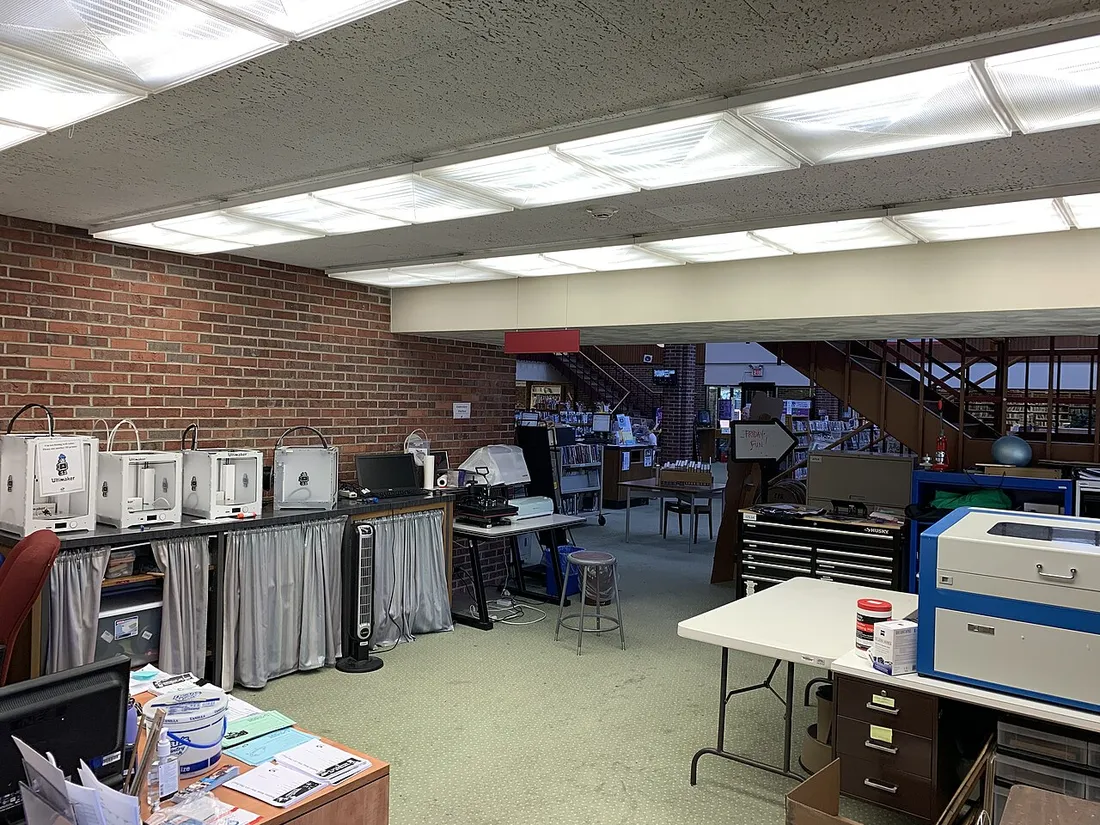
- Printing in a small space or a general work area.
- Being near the printer while it prints.
- Attending to it quickly after a print failure and during start-up.
- Opening the doors of an enclosed printer and removing supports with solvents.
By contrast, printing in an enclosed chamber with a filter or exhausted outdoors, and monitoring the print with a camera instead of standing next to it, are lower-exposure situations.
What you can do at home
NIOSH's guide is written for makerspaces, schools, libraries and small businesses, but its recommendations carry over well to the home:
- Ventilate. It's the basic measure. For makerspaces, a study cited by NIOSH recommends at least six air changes per hour or a portable HEPA purifier, and another concluded that three air changes per hour weren't enough for regular use. At home, an open window or keeping the printer in a well-ventilated room already makes a difference.
- Keep your distance. NIOSH recommends spending as little time as possible near the printer and keeping as much distance as you can. A room where you don't spend hours is better than the bedroom.
- Use the lowest temperature that works. A UK HSE study, cited by NIOSH, found that lowering the nozzle temperature and using a lower-emission filament reduced exposure.
- If it's enclosed, wait before opening. The same study suggests waiting about 20 minutes after printing before opening the enclosure.
- Clean wet. NIOSH recommends cleaning with a damp cloth or a HEPA-filtered vacuum, and not dry sweeping or using compressed air on the work area.
- Don't eat next to the printer. It's another of NIOSH's guidelines for the printing area.
If you're choosing a printer and will print ABS or ASA often, NIOSH prefers enclosures and filters built in by the manufacturer over retrofitted ones. See the options in enclosed 3D printers.
Frequently asked questions
- Is 3D printing toxic?
- Filament printers emit ultrafine particles and volatile organic compounds while printing, in amounts that depend mainly on the filament. A study published in Environmental Science & Technology recommends caution when using them in poorly ventilated spaces or without gas and particle filtration. With ventilation and some distance, exposure drops a lot.
- Does PLA emit less than ABS?
- In Azimi et al. (2016), PLA's main compound (lactide) was emitted at about 4-5 µg/min, against 10-110 µg/min of styrene from ABS and HIPS. Even so, PLA also emits ultrafine particles, so ventilating is still a good idea.
- Can I keep the printer in my bedroom?
- Better not. NIOSH recommends reducing the time you spend near the printer and keeping as much distance as possible. At home, that means a ventilated room where you don't spend hours next to it, not the room you sleep in.
- Is an enclosed printer safer?
- It helps if the chamber has a filter or exhausts outdoors: NIOSH counts that among the lower-exposure situations. But opening the door releases what's built up, which is why a UK HSE study cited by NIOSH suggests waiting about 20 minutes after printing before opening it.
Sources
- NIOSH (CDC) — Approaches to safe 3D printing: a guide for makerspace users, schools, libraries, and small businesses (2023)
- Azimi P. et al. — Emissions of Ultrafine Particles and Volatile Organic Compounds from Commercially Available Desktop Three-Dimensional Printers with Multiple Filaments (Environmental Science & Technology, 2016)
- Bambu Lab — ASA (styrene warning)