Brand
Bambu Lab
8 models in catalog · CN · founded 2020 · official site ↗
What Bambu Lab's range looks like
We hold 8 models from Bambu Lab with verified specs: all filament (FDM) machines. Of those, 5 enclosed, 3 with a heated chamber, 8 multimaterial-capable.
The range starts at the A1 Mini (€299) and tops out with the X1E (€2,499), at the manufacturer's MSRP.
The models we track span 2022 to 2026; this page lists what we have been able to verify against official sources, not the brand's full history.
What to know about Bambu Lab
Bambu Lab was founded in Shenzhen by former DJI engineers and reset expectations for what a home printer should do: fast CoreXY machines, fully automatic calibration, and multicolour printing with the AMS that works on the first try, no tinkering required. In a few years it went from crowdfunding campaign to the reference brand in consumer FDM.
Its ecosystem is among the most integrated on the market: the Bambu Studio slicer (a PrusaSlicer derivative), the Handy app for controlling the printer from your phone, and the MakerWorld model platform. Everything is polished and works together — but it is a walled garden: many spare parts are proprietary, several features depend on Bambu's cloud, and the brand has drawn controversy over firmware updates restricting control from third-party software.
Who is it for? People who want to print, not maintain a printer: the out-of-the-box experience is probably the best on the market. If long-term repairability, open software or independence from the manufacturer matter to you, look at Prusa or Sovol too before deciding.
Which Bambu Lab model to choose
The eight Bambu Lab printers in the catalogue fall into three tiers. The open A series (A1 Mini, A1 and A2L) takes the four-spool AMS lite as an option and differs mainly in size: the A1 Mini stops at 180 mm per side, the A1 goes to 256 and the A2L is the big one of the series. They're the brand's most affordable machines and are meant for PLA, PETG and TPU.
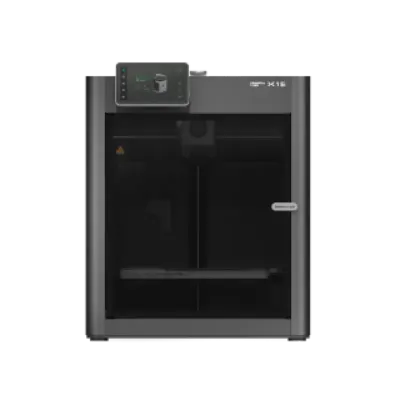
The enclosed range starts with the P1S, which with the regular AMS and a closed door already handles ABS and ASA without fighting draughts. The X1 Carbon added LiDAR calibration and a hardened-steel nozzle, but Bambu Lab no longer sells it in its European store; its professional variant, the X1E, adds a heated chamber. At the top sit the H2 machines: the H2S, large with a heated chamber, and the H2D, which adds a second nozzle and an optional laser module.
The most common dilemma is A1 or P1S. If you'll print PLA and PETG, the A1 costs a good deal less and lacks nothing; if you want ABS or ASA, or the printer will live somewhere draughty, the enclosed P1S is worth it. The H2 machines only make sense if you'll use the heated chamber, the two nozzles or the extra volume.
| Model | Type | Volume (mm) | Enclosed | Multicolour | Year |
|---|---|---|---|---|---|
| A1 Mini | FDM | 180 × 180 × 180 | No | AMS lite (4 slots) | 2023 |
| A1 | FDM | 256 × 256 × 256 | No | AMS lite (4 slots) | 2023 |
| P1S | FDM | 256 × 256 × 256 | Yes | AMS (4 slots) | 2023 |
| X1 Carbon | FDM | 256 × 256 × 256 | Yes | AMS (4 slots) | 2022 |
| X1E | FDM | 256 × 256 × 256 | Yes, heated | AMS (4 slots) | 2023 |
| A2L | FDM | 330 × 320 × 325 | No | AMS lite (4 slots) | 2026 |
| H2D | FDM | 350 × 320 × 325 | Yes, heated | AMS HT (4 slots) | 2025 |
| H2S | FDM | 340 × 320 × 340 | Yes, heated | AMS HT (4 slots) | 2025 |
Bambu Lab models in the catalogue
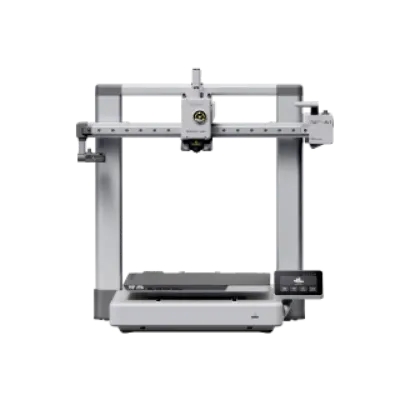
A1
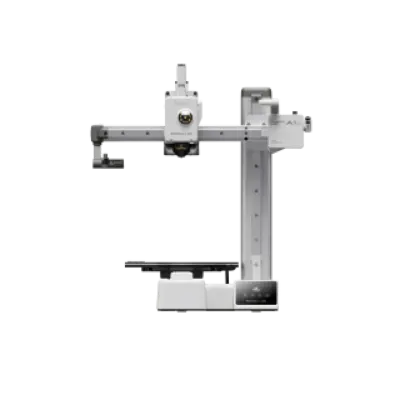
A1 Mini
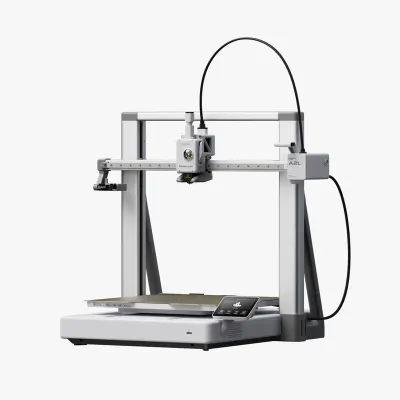
A2L
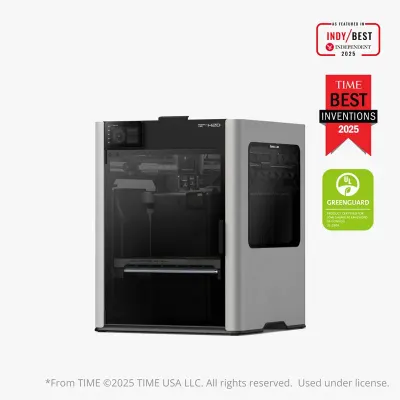
H2D
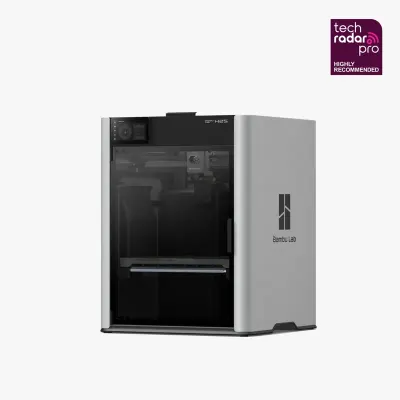
H2S
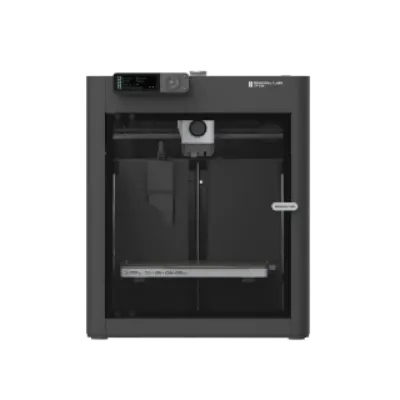
P1S
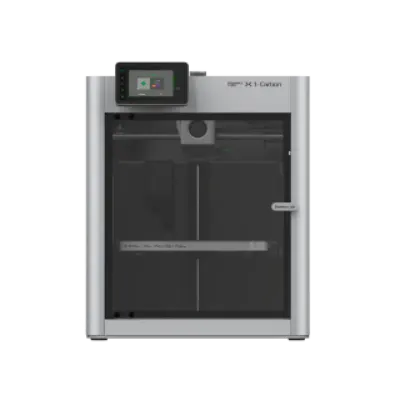
X1 Carbon