Resin
How to wash and cure resin prints (and what to do with the waste)
On a filament printer, when the machine stops, the part is done. On a resin printer it isn't: it comes out of the vat soaked in liquid resin, soft on the outside and stuck to its supports. Before you can touch it without gloves it has to be washed, dried, stripped of its supports and cured, and the leftovers (resin, solvent, paper towels) can't just go in the bin. This is the process, following what Formlabs, Prusa, Elegoo and Anycubic recommend.
Before you start: gloves and ventilation
Formlabs says it in its disposal guide: resin and solvent may cause skin irritation or an allergic skin reaction, so wear gloves when handling liquid resin; it specifies nitrile gloves. Elegoo sums it up in its beginner's guide: always wear gloves and work in a well-ventilated area. The final reference is the safety data sheet (SDS) for your resin and your solvent, which Formlabs recommends checking.
A practical tip that follows from that: set up the area before you open the lid. Paper towels on the table, the wash containers filled and within reach, and somewhere to put the build plate where it won't drip on anything.
The process, step by step
1. Drain and remove
Let the build plate drip over the vat for a while: that resin is reusable and you won't carry it into the wash. Then, Elegoo says, take the plate off and detach the model with the scraper.
2. Wash: two baths beat one
The most common solvent is isopropyl alcohol (IPA). Anycubic asks for a concentration above 95%; otherwise the part turns whitish once cured. It also recommends two baths: one to remove most of the resin and a second one, with clean alcohol, to make sure no liquid is left. That way the second bath stays clean much longer.
On timing, brands don't give the same figure because it depends on the resin and the part: Elegoo talks about 2-5 minutes soaking or gently agitating; Anycubic, 5-10 minutes for a regular part and 10-20 for large ones; Prusa, 5-15 minutes with its own cleaner. What they do agree on: don't overdo it. Anycubic warns that a part left soaking too long absorbs liquid, swells and ends up cracked and brittle. If the model has cavities, Formlabs points out that resin can stay trapped inside and need another cycle.
Water-washable resins are the exception: according to Anycubic, only those can be cleaned with water instead of alcohol. They spare you the solvent, not the gloves, and the wash water carries dissolved resin (more on that below, under waste).
3. Dry
Formlabs asks you to let parts washed in volatile solvents such as IPA dry for at least 30 minutes, so it fully evaporates before curing. Elegoo suggests air-drying them or using compressed air to avoid water or alcohol marks.
4. Remove the supports before curing
Anycubic orders the process like this: wash, remove the supports, then cure. Before curing the resin is still slightly soft and supports cut off cleanly; Elegoo recommends diagonal cutters and care around small features. Once cured they turn hard and, when you snap them, they're more likely to tear a chunk out of the surface.
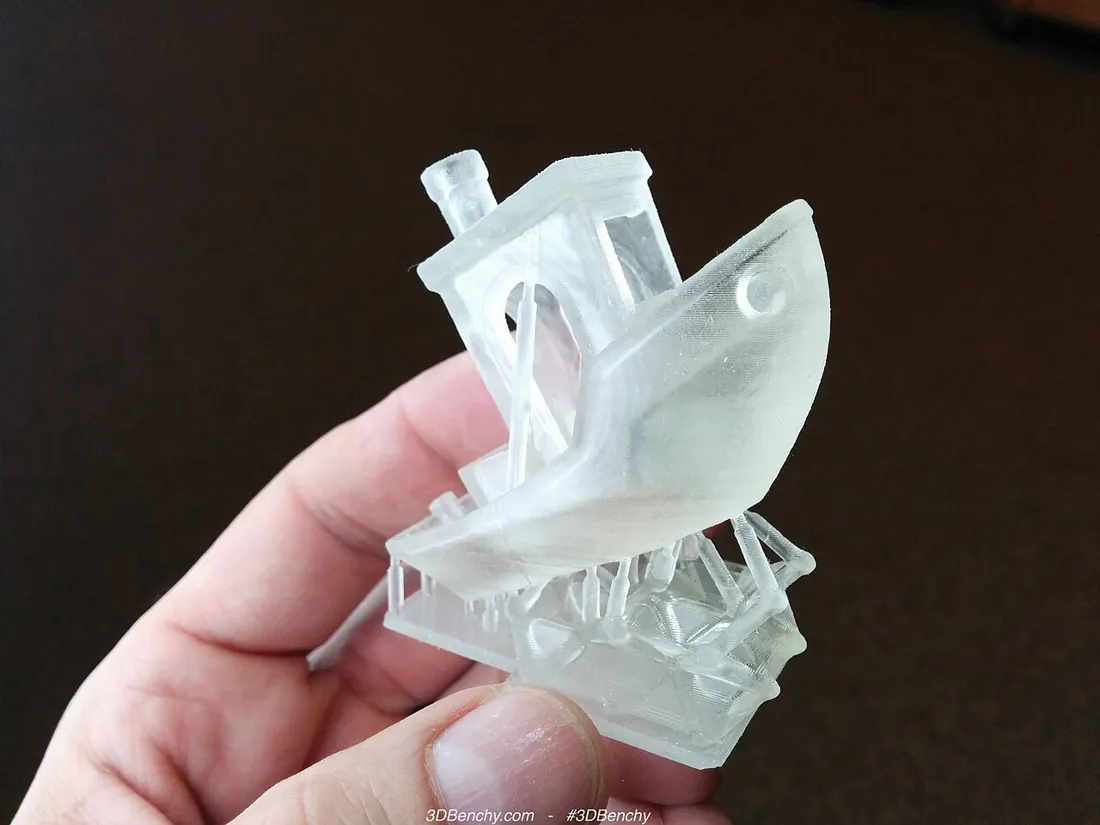
5. Cure with ultraviolet light
Curing finishes hardening the resin with UV light. Elegoo gives 2-5 minutes depending on the model's size; Formlabs gives different times for each of its resins. A curing station turns the part under 405 nm LEDs, the same wavelength consumer resin printers print with; Formlabs notes that 405 nm light combined with heat is the most effective. Follow your resin's data sheet: it's the one that knows how much it needs.
The waste: nothing down the drain
This is the most ignored part and the most important one. Formlabs, plainly: don't pour liquid or partially cured resin down the drain or put it in household waste, and the same goes for solvent (IPA or similar) that contains dissolved resin. Prusa sums it up in one sentence: anything contaminated with liquid resin is hazardous waste.
- Leftover liquid resin. Formlabs suggests putting it, with gloves on, in a labelled transparent container and leaving it in the sun for 1 to 10 days until it's fully cured. Once cured, the resin and container can go in household waste.
- Stained gloves, paper and rags. Expose them to sunlight or UV light so the resin on them cures, then bin them.
- Dirty alcohol. Anycubic describes how to recover it: let it settle for more than 10 hours so the resin sinks, separate the clean alcohol on top and cure the residue at the bottom in the sun. Solvent you can no longer use doesn't go down the sink; how to hand it in depends on where you live, so ask your local authority (household hazardous waste sites usually take solvents).
- Water from water-washable resins. It carries dissolved resin, so the same rule applies: nothing down the drain until that resin has been cured in the sun.
Isopropyl alcohol or something safer?
IPA is cheap and it works, but it comes at a cost. Formlabs reminds you that it's flammable and must be used and stored away from ignition sources. Prusa goes further and lists four problems: it's highly flammable, over time it can form dangerous peroxides, it's volatile (it evaporates and you breathe the vapour unless the room is very well ventilated) and breathing a lot of vapour irritates the nose and throat. That's why it sells an alternative cleaner based on DPM (dipropylene glycol methyl ether), with low flammability. Formlabs, for its part, accepts IPA, TPM or its own washing solution in its wash station.
If you use IPA, buy what you'll actually use, keep it closed and away from heat, and don't leave it open in an unventilated room.
Summary: the resin checklist
- Nitrile gloves and ventilation from the moment you open the lid until you throw away the last paper towel.
- Two wash baths, without overdoing the time.
- Dry (30 minutes or more if it's alcohol), remove supports, then cure.
- Resin, paper and solvent: into the sun first; never down the drain.
If you're still torn between resin and filament, we compare them in resin or filament for miniatures, and the catalogue's machines are in resin 3D printers.
Frequently asked questions
- How long should a part stay in isopropyl alcohol?
- It depends on the resin and the size. Elegoo talks about 2-5 minutes with gentle agitation; Anycubic, 5-10 minutes for a regular part and longer for large ones, ideally in two baths. Anycubic warns that soaking it too long makes it absorb liquid, swell and crack.
- Can you cure a resin print in the sun?
- Yes, sunlight contains ultraviolet, and it's what Formlabs suggests for curing leftover resin before throwing it away. For parts, a curing station gives a more controlled result: each resin's times are designed around 405 nm light.
- Can I pour dirty alcohol down the sink?
- No. Formlabs is blunt: neither liquid resin nor solvent with dissolved resin goes down the drain or into household waste. Let the resin cure in the sun, and ask your local authority how to hand in used solvent.
- Is water-washable resin safer?
- It spares you the alcohol, which is flammable, but the resin is still the same kind of product: gloves and ventilation all the same. And the wash water carries dissolved resin, so it can't go down the sink either: the resin has to be cured first.
Sources
- Formlabs — Disposing of resin
- Formlabs — Using Form Wash
- Prusa — Forget IPA for SLA print washing
- Elegoo — How to do resin 3D printing: beginner's guide
- Anycubic — How to wash and clean 3D resin prints
- Photo from Wikimedia Commons, with author and licence in the caption.