h HotEnd
ES

Buying guide · 2026

Best 3D printer for beginners (2026)

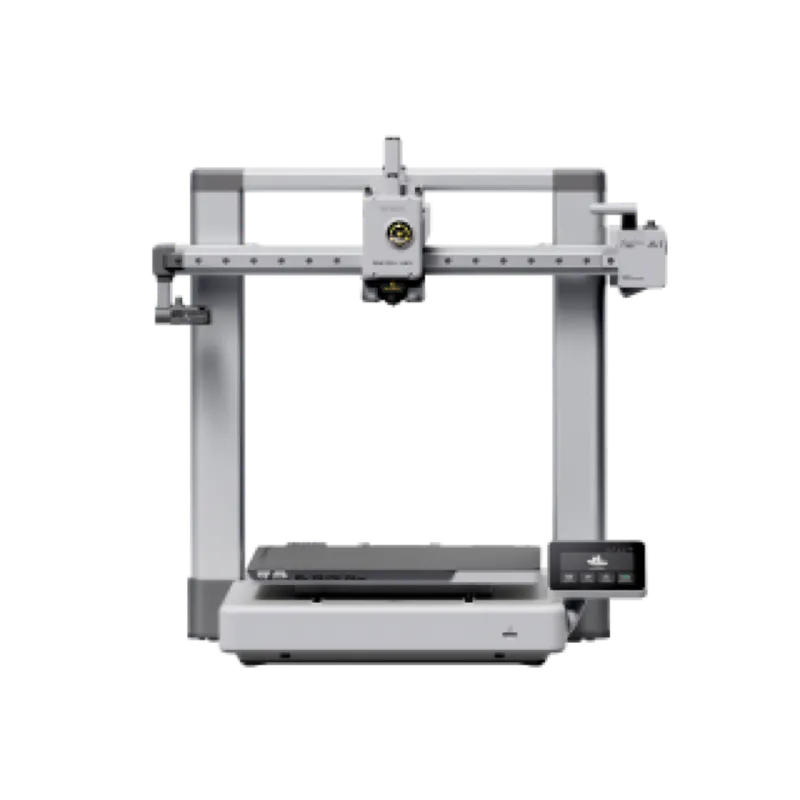
Short answer for 80% of people: the Bambu Lab A1 (€399). Long answer: it depends on your budget, your space, and whether you'll ever want engineering materials. This guide is built on our spec database, verified against official spec sheets, and a synthesis of independent reviews (cited below), not our own testing of each model.

What actually matters in a first printer

Our picks

2. Bambu Lab A1 Mini — small space or tighter budget

The same user experience as its bigger sibling for €299, with a 180 mm bed. The trade-off is volume: helmets and large props won't fit. For figures, small functional parts and learning, probably the best ease-per-euro available.

3. Creality Ender 3 V3 KE — the open alternative

Heir to the best-selling 3D printer lineage ever, now with auto leveling and 500 mm/s. It loses to the A1 on ecosystem polish but wins on openness: firmware, mods and generic spare parts. If tinkering appeals to you more than "it just works", this is your pick.

4. Creality K1C — if you already know you'll want ABS

Enclosed from the factory, 600 mm/s and a nozzle ready for carbon-fiber filaments. It costs more than the open machines, but if your plans include engineering parts (ABS, ASA, nylon) you skip buying a second printer later.

K1C vs Centauri Carbon →

5. Elegoo Centauri Carbon — enclosed at an aggressive price

Elegoo's statement machine: an enclosed CoreXY at open-printer money (€349). The classic trade-off of buying from the challenger brand: a less mature ecosystem than Bambu/Creality.

Mention: miniatures? — Elegoo Mars 5

If your only goal is tabletop miniatures, a starter resin printer like the Mars 5 (€209) delivers detail no FDM can match — at the cost of gloves, IPA, curing and ventilation. More options in our resin picks.

How we choose

Specs come from our database, cross-checked against each manufacturer's official spec sheet (the exact source is cited on every printer page). The selection criteria — which machines give beginners the least trouble — are a synthesis of independent reviewers' conclusions (Tom's Hardware, All3DP, 3DPut and others, cited below) cross-checked with verified data. We do not individually test each model. Amazon links are affiliate links: they earn us a commission at no cost to you and don't alter the order of recommendations (full policy).

FAQ

How much does a good beginner 3D printer cost in 2026?
Between €200 and €400 you get machines with full auto-calibration and excellent PLA/PETG quality. Below €200 you usually pay the savings back in calibration hours and frustration.
Do I need electronics or programming knowledge?
Not anymore. 2026 printers self-calibrate and ship with guided software. If you can install an app and follow a wizard, you can start printing.
Filament (FDM) or resin to start?
FDM, unless your only goal is highly detailed miniatures. Resin requires gloves, isopropyl alcohol, UV curing and more cleanup — better as a second printer.
Which filament should I use the first months?
PLA: cheap, easy, doesn't need a hot chamber and is perfect for learning. Once you get the hang of it, PETG for parts that need more strength.

Sources and further reading